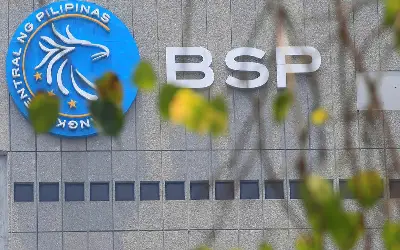
MANILA, Philippines — The Bangko Sentral ng Pilipinas (BSP) may deliver one final rate increase this month, bringing its current tightening cycle to an end, according to London-based Oxford Economics, as policymakers seek to contain persistent inflation despite weakening economic growth.
In a country economic forecast dated Sept. 30, Jun Hao Ng, an assistant economist at Oxford Economics, said the BSP may raise its policy rate by a quarter percentage point to 5.25 percent at its Oct. 22 meeting.
That would come even as core inflation—which strips out volatile food energy items—has begun to ease and economic growth slowed to 2.3 percent in the second quarter.
Oxford Economics raised its forecast for Philippine inflation this year to 5.9 percent from 5.8 percent, putting it well above the BSP’s 3 percent target.
The firm cited escalating tensions in the Middle East, which have pushed global oil prices higher.
The firm also lowered its 2026 growth forecast for the Philippines to 3 percent from 3.2 percent.
It expects the economy to expand by 3.1 percent in the third quarter, saying a slump in government investment is unlikely to materially improve until late in the quarter and elevated inflation may keep consumer spending below prewar levels in the near term.
“Inflationary pressures remain significant because of persistent Middle East tensions and El Niño’s effects on food inflation hence, the central bank is likely to act to soften the spillovers into second-round effects,” Ng said.
Since April, the BSP has raised its key rate by 75 basis points to 5 percent in response to the oil price shock tied to the US-Iran war. The latest increase came in August, when the central bank described the move as a “preemptive” step against emerging risks from a severe El Niño episode and possible wage increases.
That leaves policymakers with a delicate balancing act: containing inflation without further weighing on an already anemic economy.
The BSP must also contend with a weakening peso, which could add to imported inflation and complicate its next policy decision. Ahead of the US Federal Reserve’s decision to raise rates last month, the local currency came under intense pressure, weakening toward the P63-per-dollar level.
Looking ahead, Oxford Economics flagged several risks that could further strain the economy, including a slowdown in China, a major trading partner of the Philippines, and prolonged weakness in government infrastructure spending amid the lingering effects of a recent graft crackdown.
The firm also pointed to political uncertainty that could delay reforms, particularly the feud between President Marcos and Vice President Sara Duterte.